
Last updated September 10, 2026
Full 25-point door and opener safety check with every visit - springs, cables, rollers, tracks, and your LiftMaster or Chamberlain opener included
You get a price before we start. It does not change when the truck arrives.
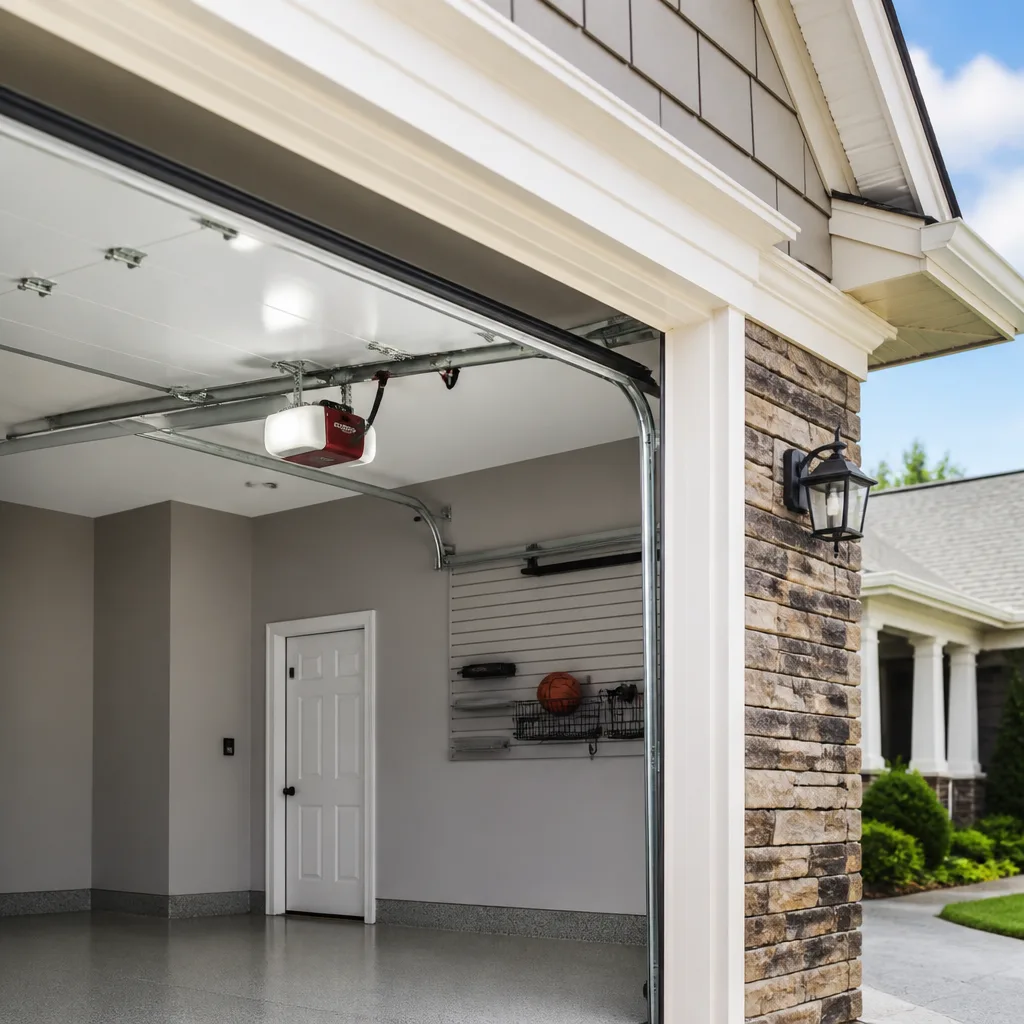
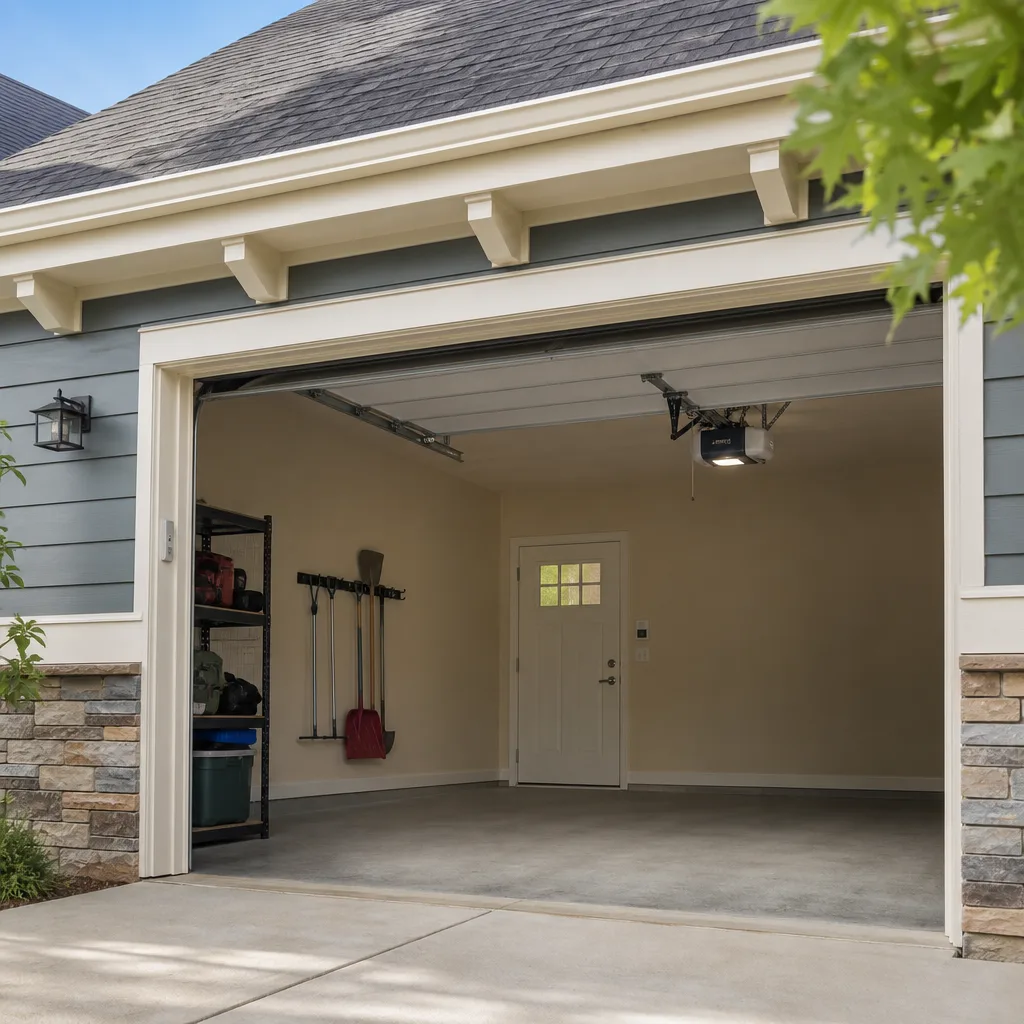
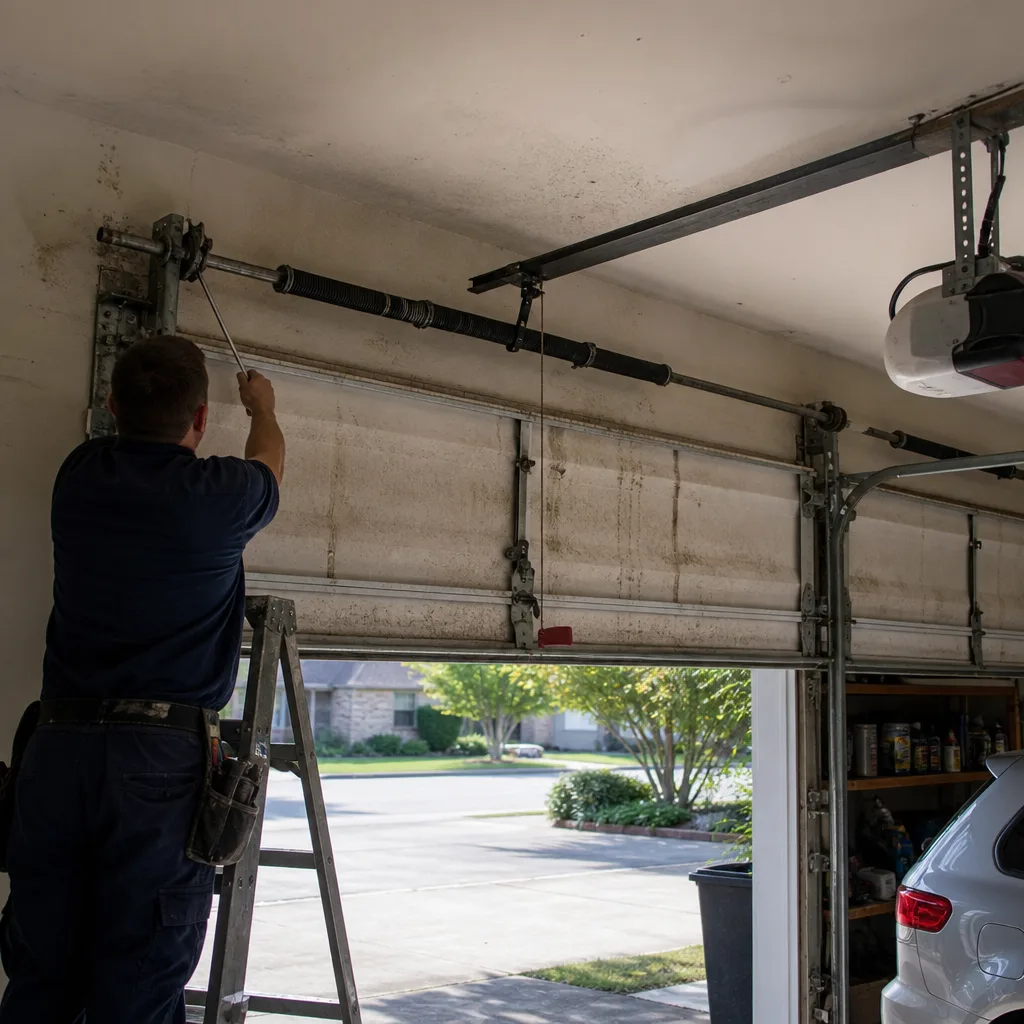 Before
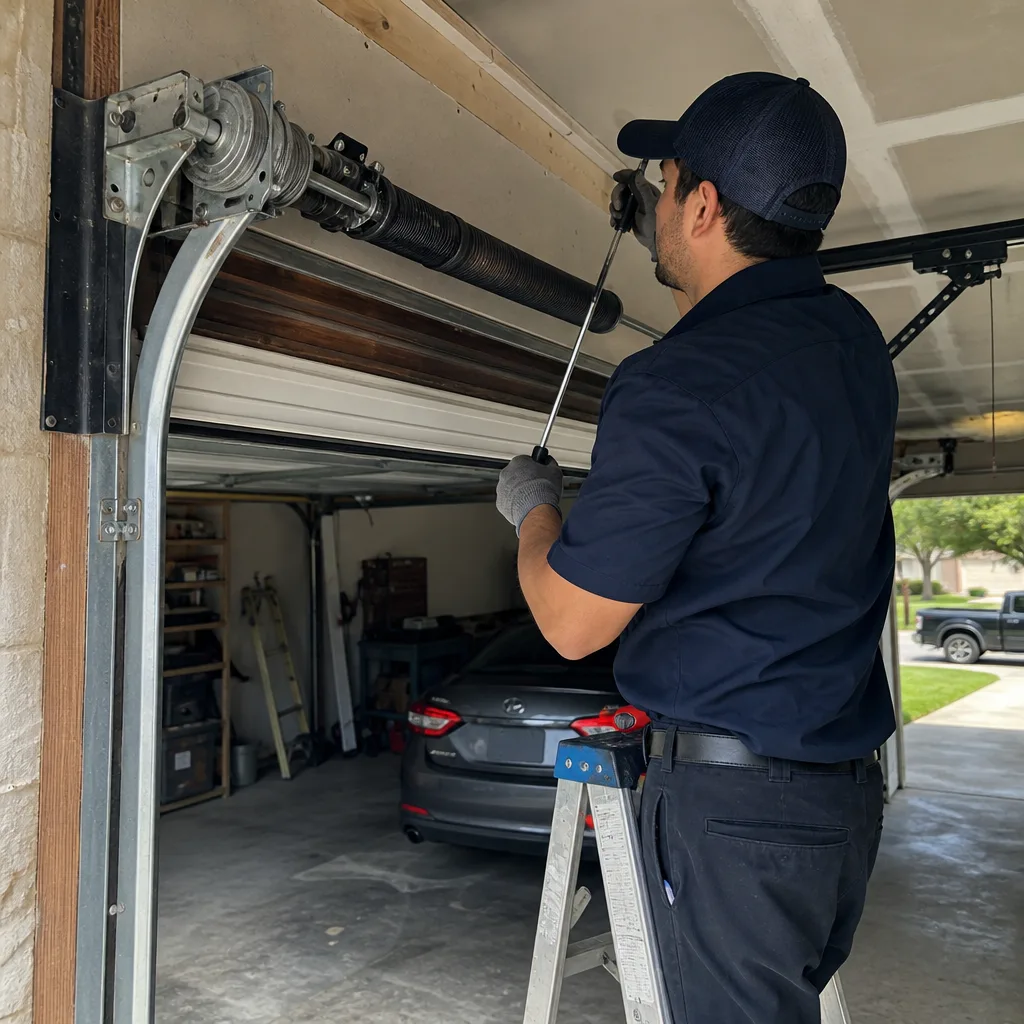 After
After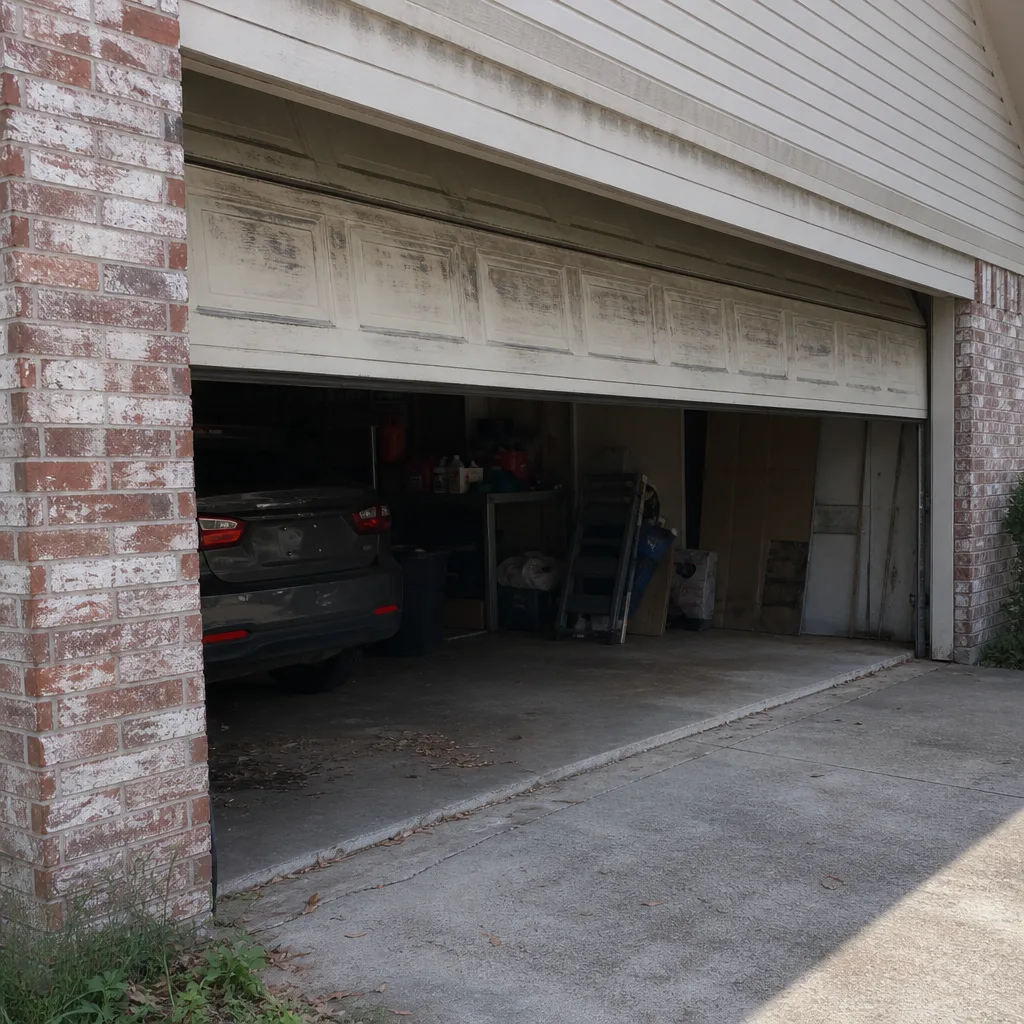 Before
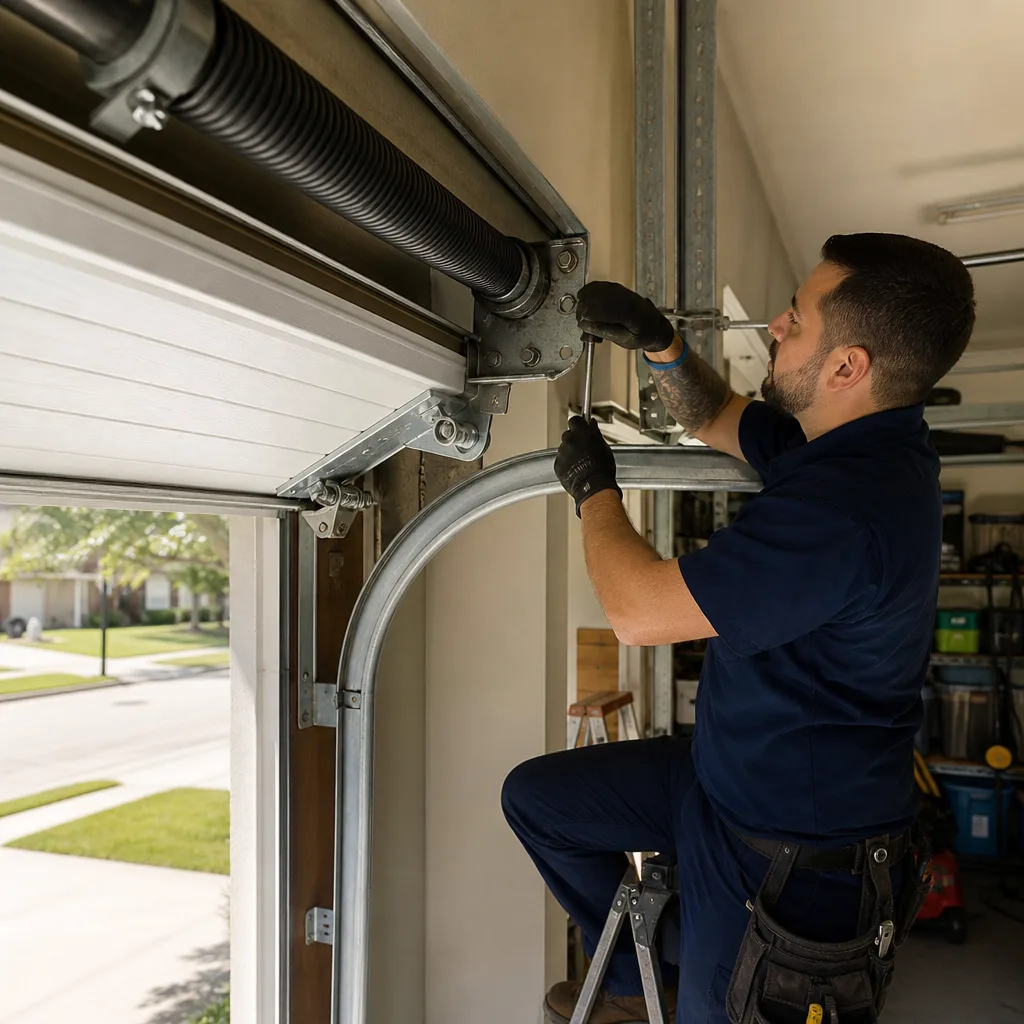 After
After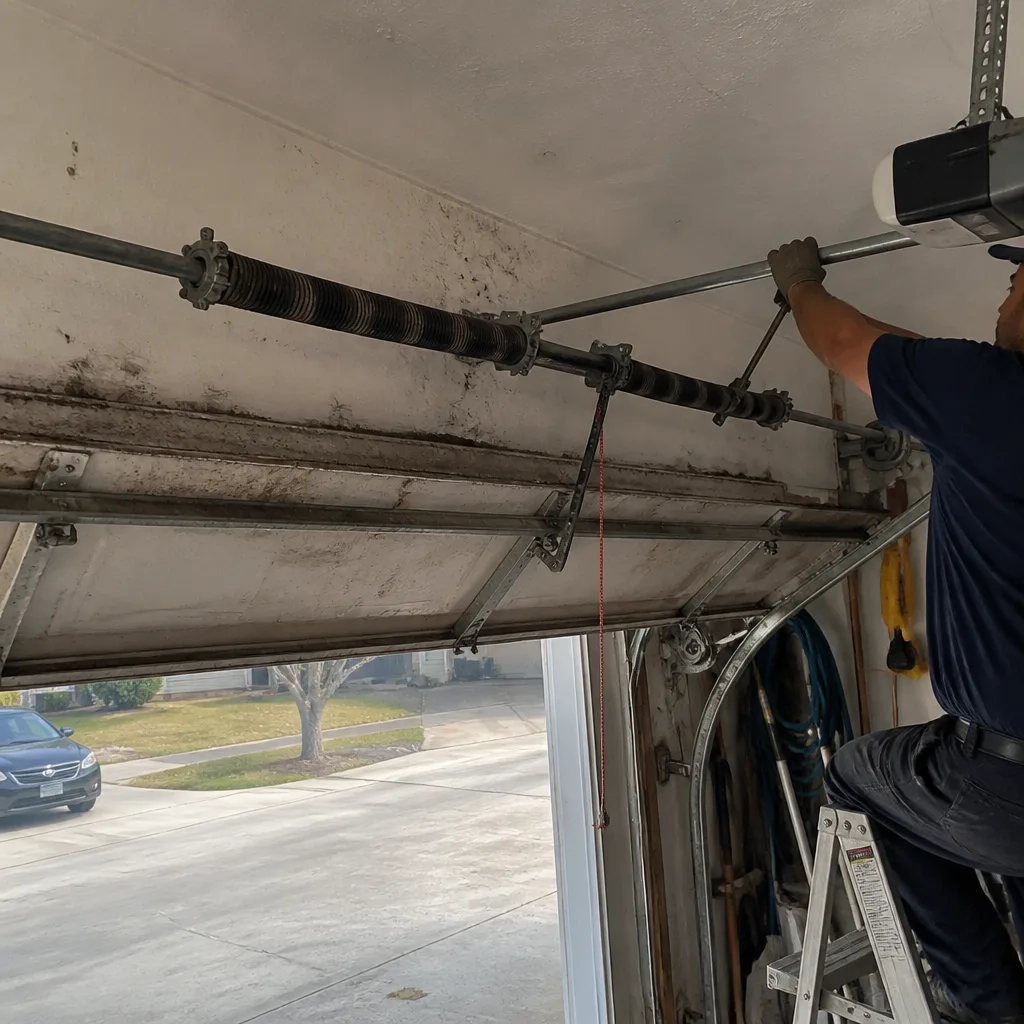 Before
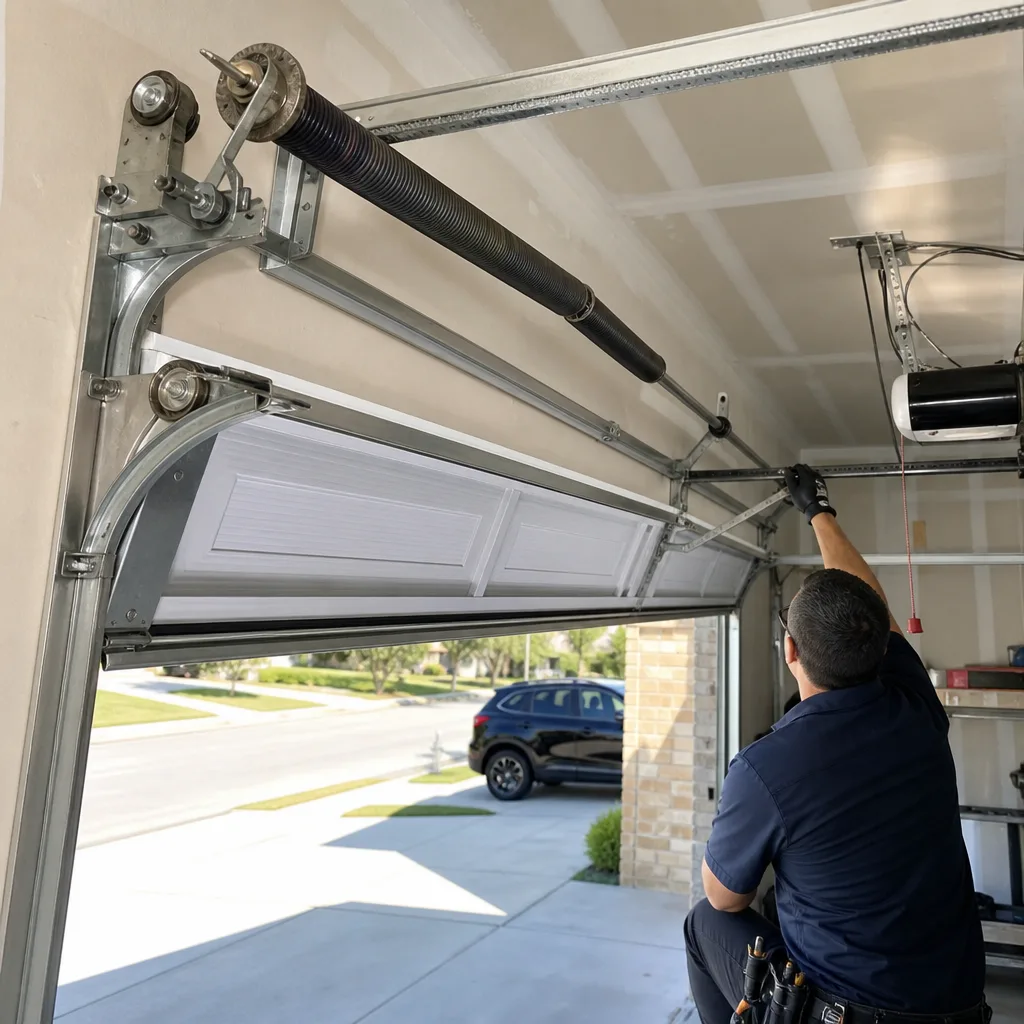 After
AfterSeasonal Garage Door Care for Liberty: Year-Round Homeowner’s Guide
In Liberty, you don’t winterize your garage door the way they do in Oklahoma. You prepare it for a two-week cold snap followed immediately by 90% humidity and 80 degrees. That yo-yo is what pops seals, cracks bottom gaskets, and locks up torsion springs that were “fine” all summer. Most maintenance guides assume four predictable seasons. Liberty gives you three windows: before the humidity locks in, during hurricane season, and the stretch when it actually gets cold. This guide maps your year to what Liberty actually throws at your door, month by month and season by season, so you fix the small stuff before it becomes a spring replacement at nine o’clock on a Sunday night. For more guides & resources, visit our blog.
Quick Answer
Seasonal garage door care in Liberty TX means timing your maintenance around humidity, hurricane season, and short cold snaps, not generic spring and fall dates. Check cable tension and seals every March before the humid stretch, test door balance monthly from May through September, inspect hardware after every named storm between June and November, and switch to a cold-weather lubricant for the brief winter window. A homeowner can handle most of this in under fifteen minutes a month, but a door that slams, drifts, or groans should be looked at by someone who does this every day. For help deciding, see our DIY vs Professional Garage Door: The Liberty Homeowner’s Decision Guide.
Table of Contents
- Spring Prep: What to Check Before the Humidity Locks In (March-April)
- Summer Balance: Why Heat Expansion Changes Your Door (May-September)
- How to Test Door Balance Yourself in Five Minutes
- Hurricane Season: The Hardware Check That Actually Matters (June-November)
- The After-Storm Spot-Check: Ten Minutes That Saves You Hundreds
- The Winter Window: Lubricating in Cold Temperatures (December-February)
- Common Mistakes to Avoid
- When to Call a Professional
- Frequently Asked Questions
- The Bottom Line
Spring Prep: What to Check Before the Humidity Locks In (March-April)
In Liberty, spring is not a thaw. It’s a countdown. March is your last stretch of comparatively mild air before the humidity arrives in May and stays through October. Once that moisture settles in, metal swells, wood doors absorb water, and rubber seals that were already cracked get worse fast. The work you do in March is about hardening the door against what’s coming, not recovering from what happened.
Start with the cables. They run up both sides of the door and hold the tension against the springs. Look for fraying, rust blooms, or any strand that’s unwinding from the bundle. A cable that lets go dumps the entire weight of the door onto whatever is under it, and a 200-pound door falling crooked is not a repair you want to schedule after it lands on something expensive. Next, roll the door up halfway and look at every roller. Nylon rollers with worn bearings rattle and drag. Steel rollers get flat spots. Either one forces the opener to work harder, which shortens its life and strains the springs.
The bottom gasket deserves more attention than almost anything else in spring. In Liberty, a bottom seal is your first line of defense against the humidity itself. A cracked gasket lets moist air into the garage, which rusts tools, warps stored boxes, and feeds the exact conditions that corrode spring coils and hardware. Run your hand along the bottom seal and look for daylight gaps where the door no longer meets the ground flush. If you can see carpet through the gap, the gasket has failed. In our experience, homeowners in Liberty replace bottom seals twice as often as homeowners in drier parts of the state, and the failure almost always announces itself in April.
If any of this sounds like more than you want to handle on a Saturday, Garage Door Repair in Liberty is exactly the kind of work Otto does before the humidity locks in, and he quotes the job on the phone so you know the number before the truck moves.
Summer Balance: Why Heat Expansion Changes Your Door (May-September)
From May through September in Liberty, your garage door is expanding and contracting almost daily. The panels heat up in the sun and cool at night, the track shifts by fractions of an inch, and the springs lose a little of their tension with every cycle because metal fatigues faster in sustained heat and humidity. A door that was perfectly balanced in April can be noticeably off by July, and most homeowners never notice until the opener starts groaning or the door refuses to stay up on its own.
Balance matters because your opener is not designed to lift the door. It’s designed to guide a balanced door up and down. When the springs are doing their job, the opener is just steering. When the springs have weakened, the opener is actually lifting, and that’s when motors burn out, gears strip, and chains stretch. A door that’s out of balance by even fifteen pounds is asking the opener to do work it was never built for.
The heat also does something sneaky to the track. Metal rails expand, and if they were installed tight against the framing, they can bow slightly inward. The door then drags along the track, leaving rub marks on the panel edges and creating the grinding sound homeowners write off as “an old door.” It’s not old. It’s binding. In Liberty, where sustained heat and humidity are the norm for five straight months, we check track alignment on almost every summer service call, and it’s rarely the part the homeowner expected to be the problem.
This is also the season when wood doors in Liberty show their age. Moisture swells the panels, and a wood door that fit fine in February can wedge itself against the jambs by August. If you have a wood door and you hear a scraping sound when it moves, the panels have absorbed moisture. Painting and sealing the door every two to three years keeps this from becoming a replacement job. If the door is already binding, the fix might be sanding and sealing, or it might be replacement. The only way to know is to look at the actual panel condition.
How to Test Door Balance Yourself in Five Minutes
This is the single most useful test a homeowner in Liberty can learn, and it takes less time than brewing coffee. It works on any sectional garage door with a manual release handle.
- Close the garage door completely.
- Pull the red manual release cord to disconnect the door from the opener. The door will now move by hand only.
- Lift the door halfway up by the handle and let go.
- Watch what the door does. A balanced door stays put, right where you left it. It might drift an inch or two, but it should hold position.
- If the door falls, the springs are under-tensioned or worn and the opener is carrying the weight. If the door shoots up, the springs are over-tensioned and the opener is fighting against the door.
- Reconnect the opener by pulling the release cord toward the door until the trolley re-engages, then run the opener once to confirm it locked back in.
Do this once a month from May through September. It catches spring fatigue early, when a spring adjustment or replacement costs a couple hundred dollars instead of a new opener motor plus a spring plus a service call at ten o’clock at night. If the door drifts more than a few inches in either direction, call someone before the opener gives out. A door is 200 pounds riding on two springs. Respect it.
Hurricane Season: The Hardware Check That Actually Matters (June-November)
Liberty sits close enough to the Gulf that every June-through-November window carries the possibility of a named storm. Most homeowners think hurricane prep means boarding windows and filling sandbags. Your garage door deserves the same attention, and for a reason most people miss: a garage door is the largest unbraced opening on your house. If the wind gets inside, it pressurizes the structure and can lift the roof off before the rain even does its work.
The hardware check that matters is simpler than you might expect. Walk the door’s perimeter and look at the hinges, brackets, and track bolts. Every one of them should be tight. A loose hinge lets the panel flex under wind load, and a flexing panel is a panel that tears out of its frame. Check the struts, the horizontal metal bars that run across the inside of the door panels. Hurricane-rated doors in Liberty have more of these than standard doors, and if your door doesn’t have any, that’s a conversation worth having with someone who installs for this climate, not a call center reading from a national script.
Here’s what “hurricane-rated” actually means, because there’s a lot of confusion: a hurricane-rated door has been tested to withstand specific wind pressures, usually measured in pounds per square foot. It means the door and its hardware were designed as a system to stay in the opening during a storm. It does NOT mean the door is waterproof, does NOT mean the opener will work without power, and does NOT mean your garage won’t flood. It means the door won’t fold into your living room at 120 mph. That’s the whole promise, and it’s a good one to have here.
If you have a standard door and you’re in the path of a Gulf storm, the practical move is to make sure every hinge, bracket, and bolt is tight, and if the door is older than fifteen years, have someone assess the reinforcement. Some doors can be retrofitted with struts. Some can’t. Otto has been working on Liberty garage doors since 2004 and he’ll tell you straight which camp your door falls into. For the full picture, read The Complete Guide to Garage Door in Liberty. No pressure, just the truth.
The After-Storm Spot-Check: Ten Minutes That Saves You Hundreds
After every major storm in Liberty, run this routine. It catches about 80% of the damage that compounds into expensive repairs later, and it takes less than ten minutes.
- Stand inside the garage with the door closed and look for daylight at the top, bottom, and sides. Storm winds flex the door, and a door that held might still have shifted in its tracks.
- Run the door through one full open-close cycle and listen. New squeaks, groans, or pops after a storm are not things to ignore. They mean something moved.
- Check the weatherstripping along the bottom and sides. High wind peels loose seals, and a peeled seal lets in water, bugs, and humidity.
- Look at the track on both sides. If it’s bent, even slightly, the door will eventually derail. A derailed door is a dangerous door.
- Eyeball the springs above the door. Storm-driven rain and humidity accelerate rust, and rusted springs break faster.
- Open and close the door manually using the release cord, and feel for resistance or binding that wasn’t there before the storm.
If anything on this list looks wrong, the damage is almost always cheaper to fix the week you notice it than the month after it compounds. That’s the quiet math of garage door maintenance, and in Liberty’s storm season, ignoring it is the most expensive option.
The Winter Window: Lubricating in Cold Temperatures (December-February)
Liberty’s winter is more of a suggestion than a season. You get a couple of weeks of real cold, a few nights below freezing, and then the humidity comes back. That’s why your lubrication strategy has to change. The garage door lubricant that works fine at 70 degrees thickens below 40 degrees, and thickened lubricant does the opposite of what you want: it makes the rollers drag, forces the opener to pull harder, and puts uneven stress on the springs.
For the cold window, use a silicone-based or lithium-based lubricant rated for low temperatures. Do not use WD-40. WD-40 is a solvent and rust dissolver, not a garage door lubricant, and every year we see doors in Liberty that were doused in it because someone’s grandad swore by it. It strips the actual lubricant off the parts and leaves them dry. In the cold, dry parts bind worse.
What to lubricate, in order: the rollers, the hinges, the springs, and the bearing plates at the ends of the torsion tube. A light coat is enough. You are not greasing a wheel axle. You are putting a thin film on moving metal so it doesn’t scrape against itself. Do this once in December and once more if we get an extended cold snap. The cold is also when springs are most likely to break. Metal contracts when it’s cold, and a spring that has been cycling for ten years in Liberty heat is already fatigued. The extra contraction is often the final straw. If your door suddenly won’t open on a cold morning and you hear a loud bang, that’s a broken spring, and it is not a DIY fix. Torsion springs store enough energy to seriously injure someone who doesn’t know how to release it safely. Call a professional.
Common Mistakes to Avoid
- Using WD-40 on the rollers and hinges. It strips lubricant and leaves the metal drier than before. In Liberty’s humidity cycle, dry metal rusts fast, and rusted parts bind. Use a proper silicone or lithium garage door lubricant instead.
- Ignoring a noisy door because “it still works.” A door that grinds, squeaks, or pops has already started the failure process. The noise is the early warning. Fixing it then costs far less than fixing it after the part breaks completely.
- Testing the safety sensors by waving your hand instead of using a solid object. Sensors need a consistent obstruction to trigger. A cardboard box is a better test. If the door reverses on the box, the sensors work. If it crushes the box, they don’t.
- Letting the bottom gasket go un-replaced after it cracks. In Liberty, that crack is a humidity highway into your garage. Everything in the garage, including the door’s own hardware, suffers from the extra moisture.
- Replacing the opener when the real problem is the springs. If the opener is straining, the problem is almost never the opener. Test the door balance first. In our experience, most “dead openers” in Liberty are just openers that burned out from lifting a door the springs stopped carrying.
- Doing spring work yourself. Garage door springs are under enough tension to cause serious injury or worse. We say it plainly because we have seen the results of good people trying to save a buck. A spring replacement is a professional job, full stop.
- Skipping the post-storm check because the power is out. You don’t need power to inspect the door. If the door sat through high wind, it needs a visual check even if you can’t run the opener yet.
When to Call a Professional
Call someone when the door slams down instead of closing gently, when the opener runs but the door doesn’t move, when a spring has visibly snapped, when the door is off its track, or when the door is so out of balance that it falls more than a few inches when you release it manually. These are not tune-up items. These are structural and mechanical faults that get worse every time you open and close the door, and some of them are genuinely dangerous to work on without training. Otto’s Garage Door offers free estimates in Liberty, and the number is (346) 496-4718. If you’re not sure whether you have a problem, describe it over the phone. The person who answers will tell you straight whether it’s a fix-now situation or something that can wait.
Frequently Asked Questions
Lubricate the rollers, hinges, springs, and bearing plates twice a year in Liberty, once in March before the humid stretch and once in December before the cold window, using a silicone or lithium lubricant rated for low temperatures. A light coat on the moving parts is all it takes, and it keeps the door running smoothly through both the heat expansion months and the brief cold snaps. If your door sees heavy use, every day multiple times a day, add a third lubrication in mid-summer. Call (346) 496-4718 if you want us to do the full service with the right products.
A full maintenance service call in Liberty typically runs between $89 and $160, depending on what the door needs. For detailed pricing, see our Garage Door Cost Breakdown: The Liberty Homeowner’s Reference for 2026. Lubrication, balance testing, hardware tightening, and sensor checks are at the lower end. Replacing a bottom gasket or worn rollers, or adjusting springs, pushes it higher, but nothing about maintenance should surprise you because the price is quoted and agreed before any work starts. For an exact quote, call (346) 496-4718 and Otto will give you the number on the phone and hold it at the door.
A silicone-based or lithium-based lubricant rated for temperatures below 40°F is the best choice for Liberty’s winter window because it doesn’t thicken in cold air the way standard oils do. Avoid WD-40 for garage door parts, it’s a solvent that strips lubrication, not a replacement for it. The same cold-rated lubricant works fine in summer too, so one can of the right product covers you year-round.
Yes, a spring replacement is a same-day job in Liberty if you call during business hours, and Otto quotes the exact price on the phone before he leaves his driveway. A snapped spring is an emergency because your vehicle is often sealed inside the garage, and the repair itself usually takes under two hours. Call (346) 496-4718 and a live person answers, not an answering service.
No. The price quoted on the phone is the price on the invoice, unless the door turns out to have a different problem than described and we agree on the new number before doing anything. That’s the whole point of the 90-Day Done Right Promise and the upfront pricing policy. Nothing gets billed that wasn’t agreed to in advance, and the owner’s name is on the invoice, not a customer-service ticket number.
Yes, the service vehicles in Liberty carry the common repair parts: springs, cables, rollers, hinges, bottom gaskets, fasteners, plus Genie, Clopay, Amarr, and Wayne Dalton compatible components. Most repairs get done on the first visit because the truck is stocked for what Liberty doors actually fail with, not what a national catalog thinks a garage door might need. If your door is vintage or unusual, Otto will tell you before the visit so you know the timing.
The Bottom Line
Liberty doesn’t give you four predictable seasons, and your garage door maintenance shouldn’t pretend it does. The work that protects your door happens in March, before the humidity locks in. It happens monthly during the heat expansion months, it happens after every storm between June and November, and it happens in December when the cold snap tells you whether your springs have any cycles left. Every one of these checks is fast, specific, and cheap compared to what happens when you skip them. If you do nothing else, test the door balance monthly and replace the bottom gasket when it cracks. But if you want a second set of eyes, call (346) 496-4718 for a free estimate. Otto’s Garage Door home is here in Liberty, owner-operated since 2004, and Otto counts spring cycles the way you count tire miles. He’ll tell you what’s left on yours, and he’ll tell you the truth about what the door needs. For new doors, Garage Door Installation in Liberty is built around the climate, and for opener work, Garage Door Opener in Liberty is handled by someone who knows the difference between a dead opener and an overworked one.
Written by Otto Reinhardt, Owner at Otto’s Garage Door, serving Liberty since 2004.