
Last updated September 10, 2026
Full 25-point door and opener safety check with every visit - springs, cables, rollers, tracks, and your LiftMaster or Chamberlain opener included
You get a price before we start. It does not change when the truck arrives.
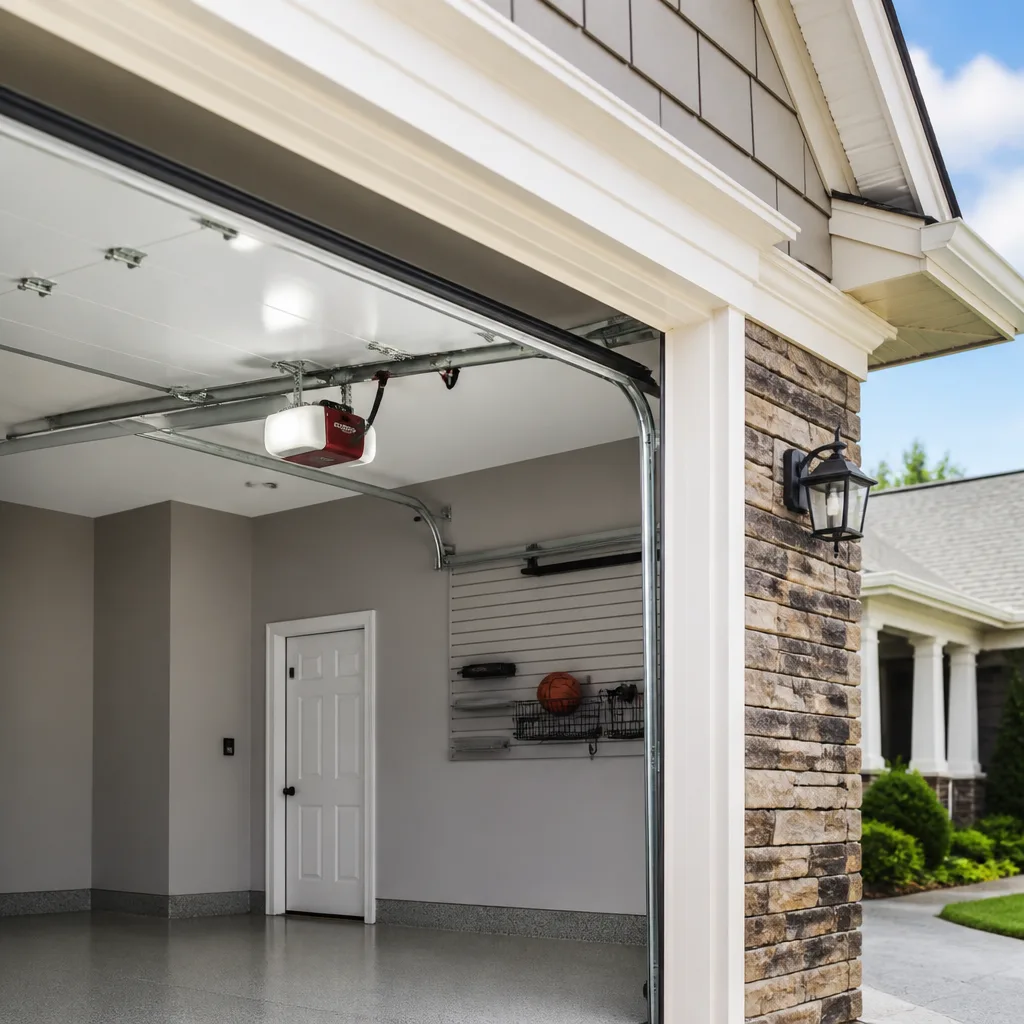
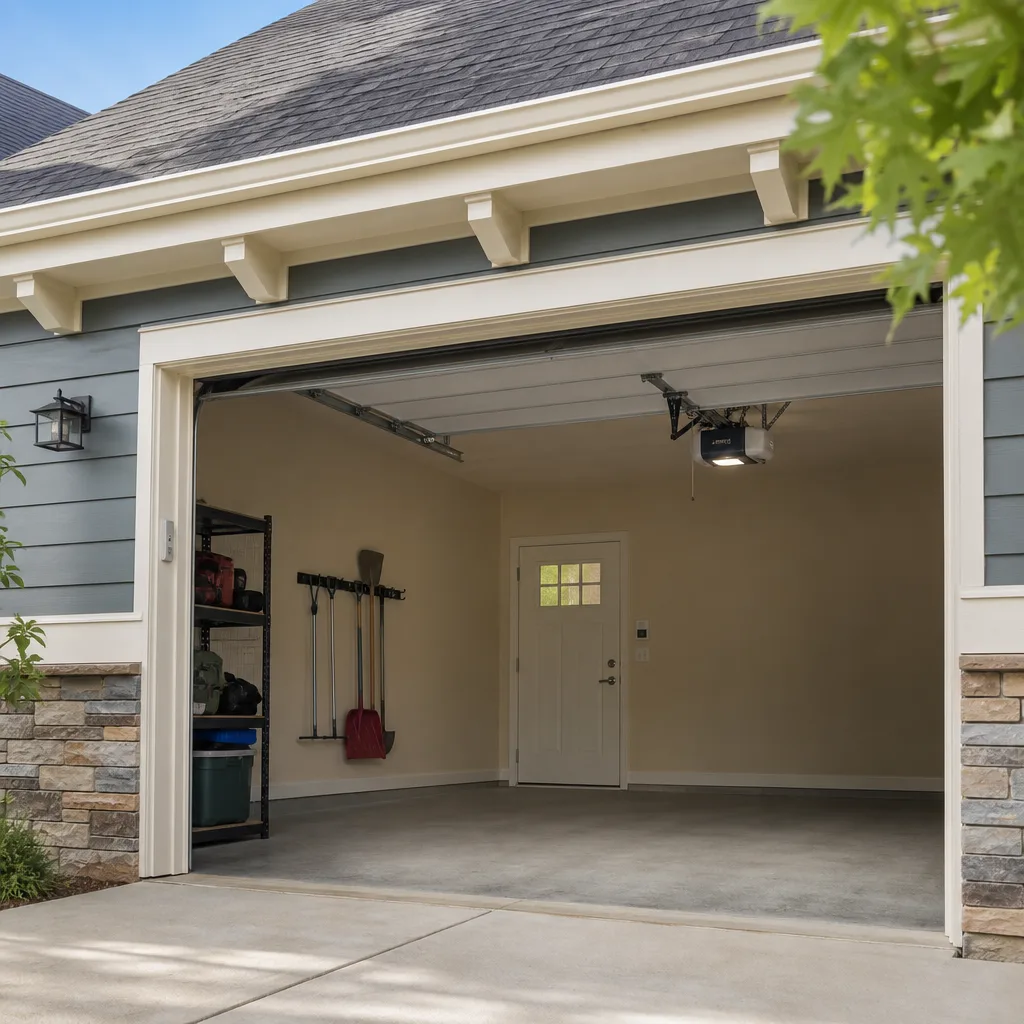
 Before
 After
After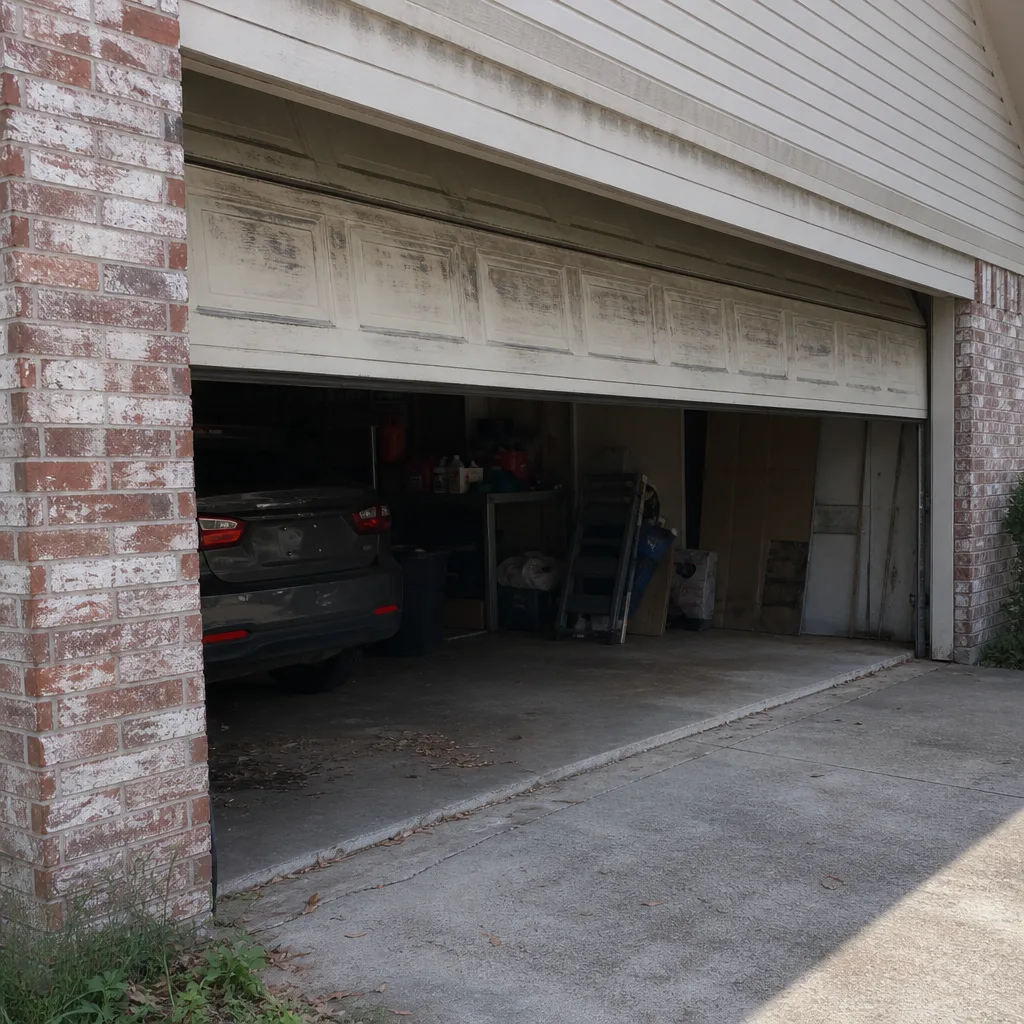 Before
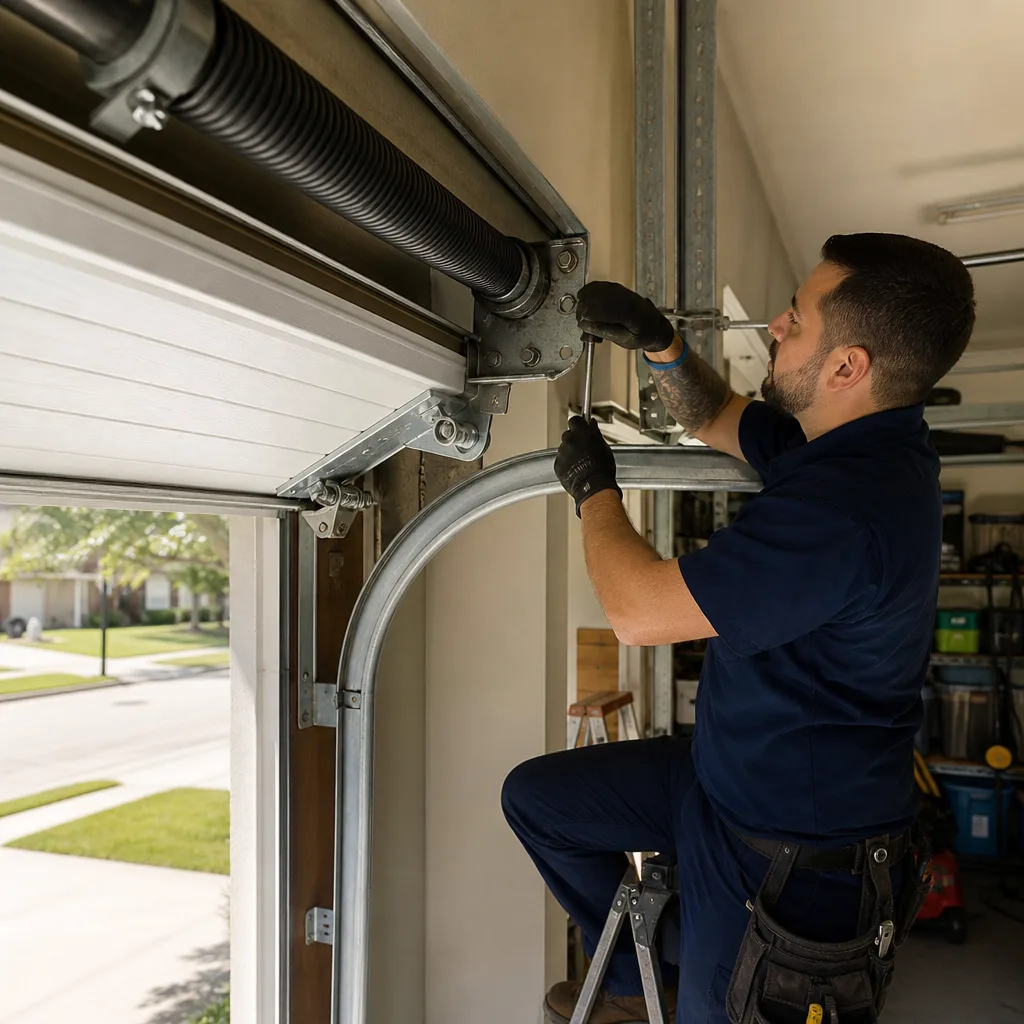 After
After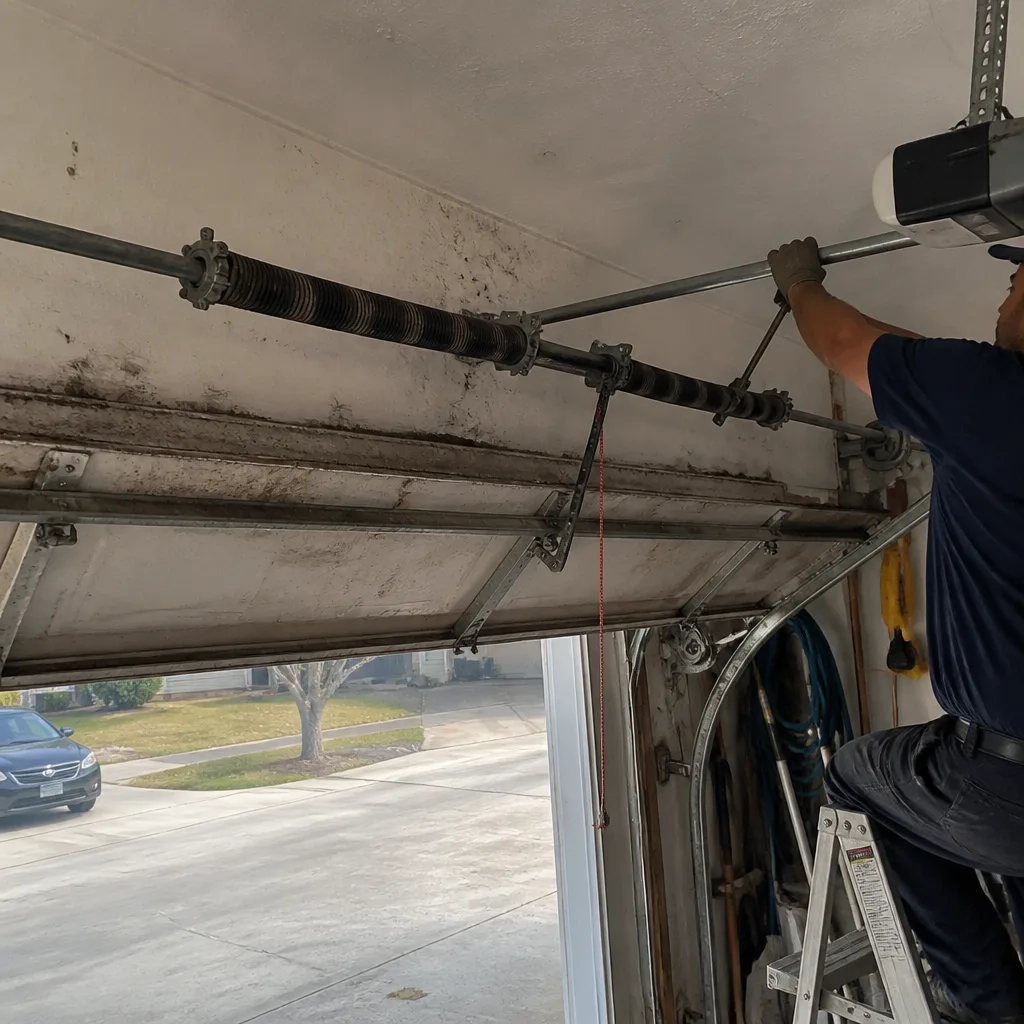 Before
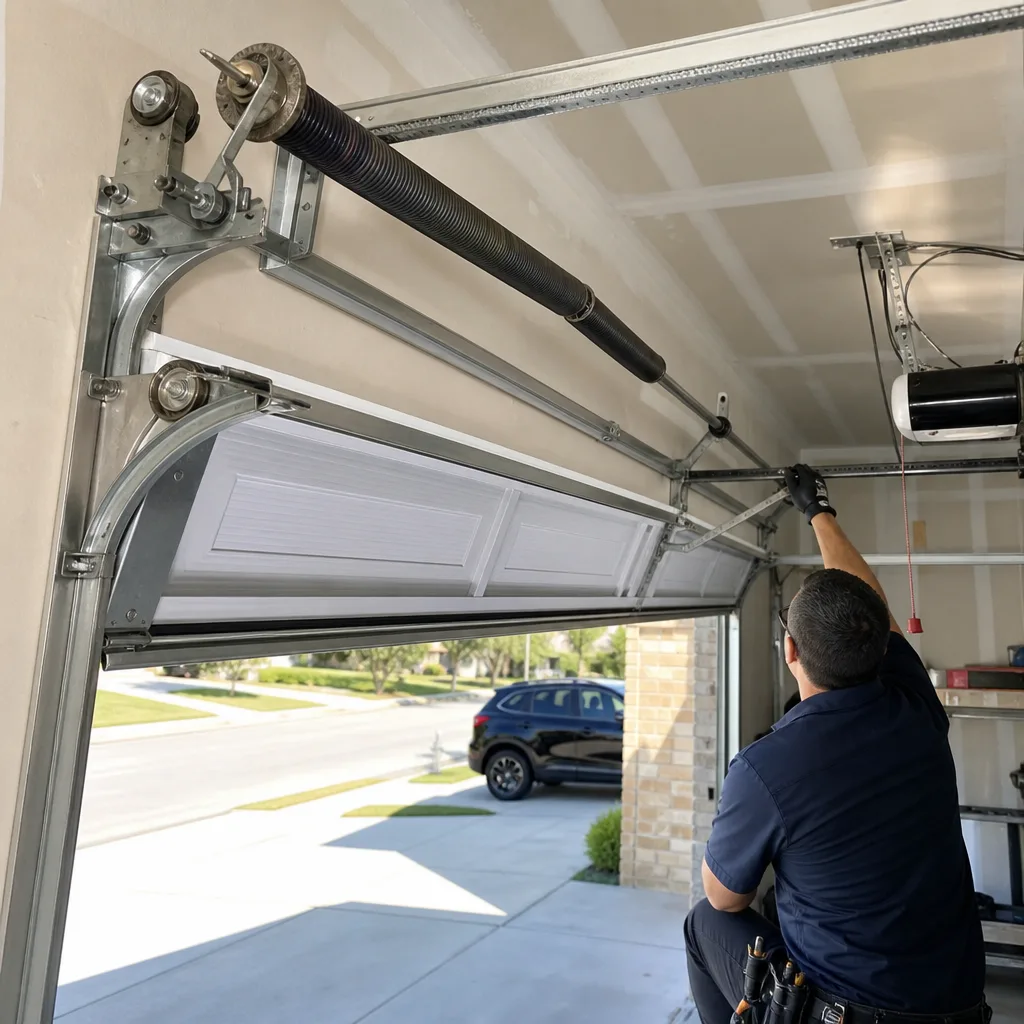 After
AfterGarage Door Repair Maintenance Checklist for Liberty Homeowners
Every October, the phone at Otto’s rings with the same call: a homeowner in Liberty whose garage door spring seized up overnight, right when they needed to get the truck out for work. These are the kinds of emergencies our Garage Door Warning Signs: A Liberty Homeowner’s Reference Guide is designed to help you prevent. Nine times out of ten, the failure wasn’t sudden. It was a door that hadn’t been lubricated since spring, a cable that had been fraying quietly for months, and a safety sensor that hadn’t been tested since the day it was installed. The maintenance got done. It just got done at the wrong time, with the wrong products, and without the checks that actually catch failures before they happen. This checklist is built around Liberty’s actual calendar: the wet summer, the hurricane season, the one cold snap, and the caliche dust that settles on everything. Do the right task in the right month and your door will outlast your neighbor’s by years.
Quick Answer
A garage door maintenance checklist for Liberty homeowners should follow the local climate calendar: lubricate rollers and hinges with a silicone spray in April before the wet season, test the auto-reverse and photo-eye sensors monthly, inspect cables for fraying after every major storm, and run the overnight door test each November before the first cold front. The five-point safety reversal test takes 90 seconds and is the single most skipped maintenance item on every DIY list, despite being the one that prevents serious injury or vehicle damage.
Table of Contents
- The Liberty Climate Calendar: Why Timing Beats Effort
- The Five-Minute Monthly Walkaround
- The Five-Point Safety Reversal Test (90 Seconds)
- Lubrication: What to Use and What Makes It Worse
- How to Spot Cable Fraying Before It Snaps
- The Overnight Door Test After a Big Storm
- Seasonal Tune-Up Guide: Month by Month
- Common Mistakes to Avoid
- When to Call a Professional
- Frequently Asked Questions
The Liberty Climate Calendar: Why Timing Beats Effort
Liberty sits in a climate that punishes garage doors in three specific ways. First, the humidity. From April through September, the air is heavy enough to rust exposed metal and swell wooden frames. Second, the caliche dust. When it doesn’t rain, the fine white dust from the caliche roads and driveways settles into every roller track, hinge, and bearing surface. Third, the unpredictability. Liberty gets hot in August, wet in September, cold enough to freeze a poorly lubricated door in January, and windy enough during hurricane season to knock a misaligned door off its track entirely.
Most garage door advice online follows a generic spring/fall split. That’s fine for Ohio. It’s wrong for Liberty. Here in town, we’ve watched doors fail in patterns that follow the seasons exactly. The door that seizes in October was last touched in March. The cable that snaps in February had been fraying since a September windstorm knocked the door slightly out of square. The opener that burns out in July had been straining against an under-lubricated track since the first humid week of May and nobody noticed until the motor gave up.
We’ve been at this since 2004, and we count spring cycles the way you count tire miles. That means we can tell you precisely when a door in Liberty needs attention: before the wet season starts in April, after peak hurricane season ends in October, and before the January cold front catches everyone off guard. Do the maintenance in those three windows and the rest is just habit.
The Five-Minute Monthly Walkaround
Once a month, stand in front of your garage door with the door closed and give it a once-over. This is not a repair job. It’s a habit that catches problems before they become calls.
- Look at the door from six feet back. Does it hang level? If one side sits lower than the other, something is shifting. That could be a spring losing tension or a track that’s worked loose. Both get worse.
- Look at the gap between the door and the frame on each side. It should be even from top to bottom. If the gap is wider at the bottom than the top, the track is spreading. That’s the most common cause of a door jumping its track in Liberty, especially after a storm.
- Listen while the door opens and closes. A healthy door is quiet. A door that grinds, squeaks, or thumps is telling you something specific. A squeak is dry metal. A grind is caliche dust in the track. A thump at the top of the travel is a roller hitting a worn spot. Each one has a fix, but only if you catch it early.
- Open the door halfway and let go. The door should hold its position. If it drifts down, the springs are losing tension. If it drifts up, the springs are overwound. Both conditions are unsafe and eventually become a full spring failure.
- Check the weather seal along the bottom. In Liberty, that rubber strip keeps water out during the wet months and keeps snakes and mice out year-round. If it’s cracked, brittle, or pulling away from the door, replace it before the next rain. A few dollars of weather seal saves a lot of garage cleanup.
We’ve run this exact walkaround on thousands of doors in Liberty, and the homeowners who do it monthly rarely call us for the big-ticket failures. It’s the ones who don’t that keep the emergency line ringing.
The Five-Point Safety Reversal Test (90 Seconds)
Your garage door opener has a safety system designed to stop and reverse the door if it meets resistance or if something breaks a beam near the floor. That system only works if it’s tested. In our experience across Liberty, this is the single most skipped item on every DIY maintenance list, largely because nobody knows the test takes 90 seconds and requires zero tools.
Here’s the five-point test:
- Lay a 2×4 flat on the floor under the door, in the center. Close the door. It should hit the wood and reverse within two seconds. If it doesn’t, the force setting on the opener is too high.
- With the door closing, wave your hand in front of one photo eye. The door should stop and reverse immediately. The photo eyes are the two small black sensors mounted about six inches off the floor on either side of the door. One sends a beam, one receives it. Break the beam and the door must reverse.
- Test the second photo eye the same way. Sometimes one eye is dirty or misaligned while the other works fine. Test both separately.
- With the door open, press the wall button and pull the emergency release cord while the door is closing. The door should stop immediately when the cord is pulled. This tests the mechanical disconnect that lets you operate the door manually during a power outage.
- Close the door fully and check that both photo eyes are clean and aligned. Caliche dust collects on the small lenses here in Liberty. Wipe them with a dry cloth. If the small indicator light on one eye isn’t steady green, the beam is misaligned and the door may refuse to close.
A garage door is 200 pounds riding on two springs. Respect it. If any of these five tests fail, the door is not safe to operate and the opener’s force and travel limits need adjustment. Broken springs are dangerous to handle. Leave spring replacement and tension adjustments to someone who does it daily.
Lubrication: What to Use and What Makes It Worse
The most common lubrication mistake we see in Liberty is also the most preventable one: using the wrong product. WD-40 is the worst. It’s a solvent, not a lubricant. It strips whatever lubricant was already on the metal, provides no lasting protection, and actually attracts caliche dust by leaving a thin, tacky residue. Grease is almost as bad. Heavy grease on a garage door track holds the fine dust and grime that blows around Liberty County and turns it into grinding paste. We’ve seen doors we serviced six months earlier come back with tracks completely gummed up because the homeowner “greased the door” with axle grease from the farm supply.
What works here, in the specific conditions Liberty throws at a door, is simple:
- White lithium grease or a dedicated garage door spray lubricant on the chain drive of a garage door opener. Apply a light coat once a year.
- Silicone spray on the rollers, hinges, and bearings. Silicone dries clean, doesn’t hold dust, and works well in both the heat of an August afternoon and the cold of a January morning.
- Nothing at all on the track itself. Clean the track with a cloth, but never lubricate it. The rollers run on the inside of the track and they should be lubricated on their own bearings, not the surface they ride on. A lubricated track collects dust and creates friction, which is the opposite of what you want.
Lubricate at least twice a year in Liberty: once in April before the wet season, and once in October after the dust settles from the dry fall. If you live on a caliche road or a gravel drive, three or four times a year isn’t excessive. A door that opens smoothly is a door that isn’t stressing the opener or wearing out rollers.
How to Spot Cable Fraying Before It Snaps
You don’t need any mechanical background to spot a failing cable. You need to know what to look for and where to look for it. The cables on a garage door are the two steel strands that run from the bottom corner brackets up to the spring system at the top. They carry the tension that the springs create. When a cable frays, it doesn’t snap all at once. It gives you warning: a few broken strands, a small birdcage of wire poking out, a section that looks rougher than the rest.
Here’s what to look for in Liberty, and why it matters here specifically:
- Broken strands. Run your finger lightly along the cable length (use a glove; you’re checking for the sharp ends). If you feel or see any individual wire strands that are broken and sticking out, the cable is on its way to failure. In our experience, a cable with three broken strands will typically snap within months.
- A “birdcage” anywhere along the cable. This is a spot where the cable has partially unraveled and looks twisted or puffed outward. It means the cable has jumped a track or been kinked, usually during a storm when the door shifted.
- Rust. Cables rust in Liberty’s humidity, especially on doors that get afternoon sun and then cool overnight, pulling condensation onto the metal. Surface rust is one thing. Deep rust that flakes off when you touch it is another. That cable is compromised.
- Loose cable. With the door closed, look at both cables. They should be taut. If one has slack, the door is out of balance or the cable drum has slipped. A loose cable can jump off the drum while the door is moving, which causes the door to crash sideways.
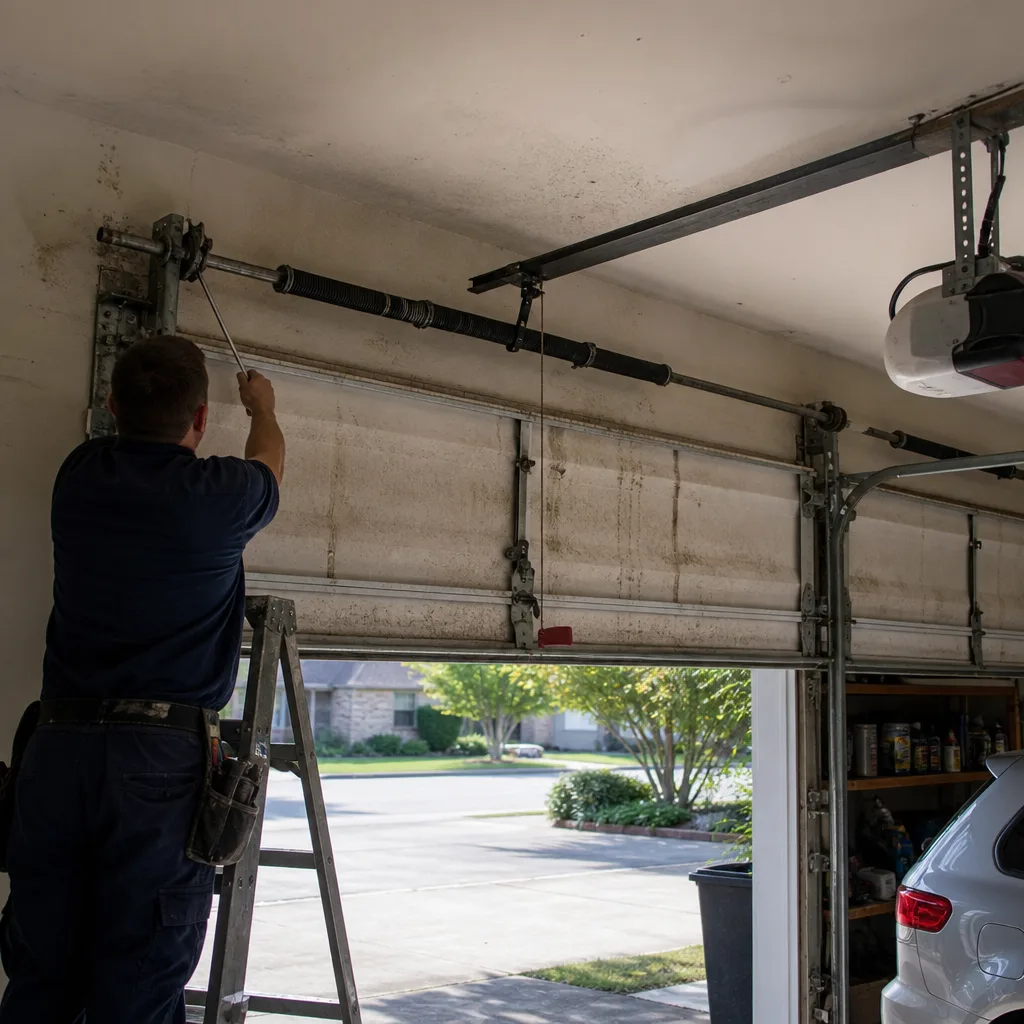
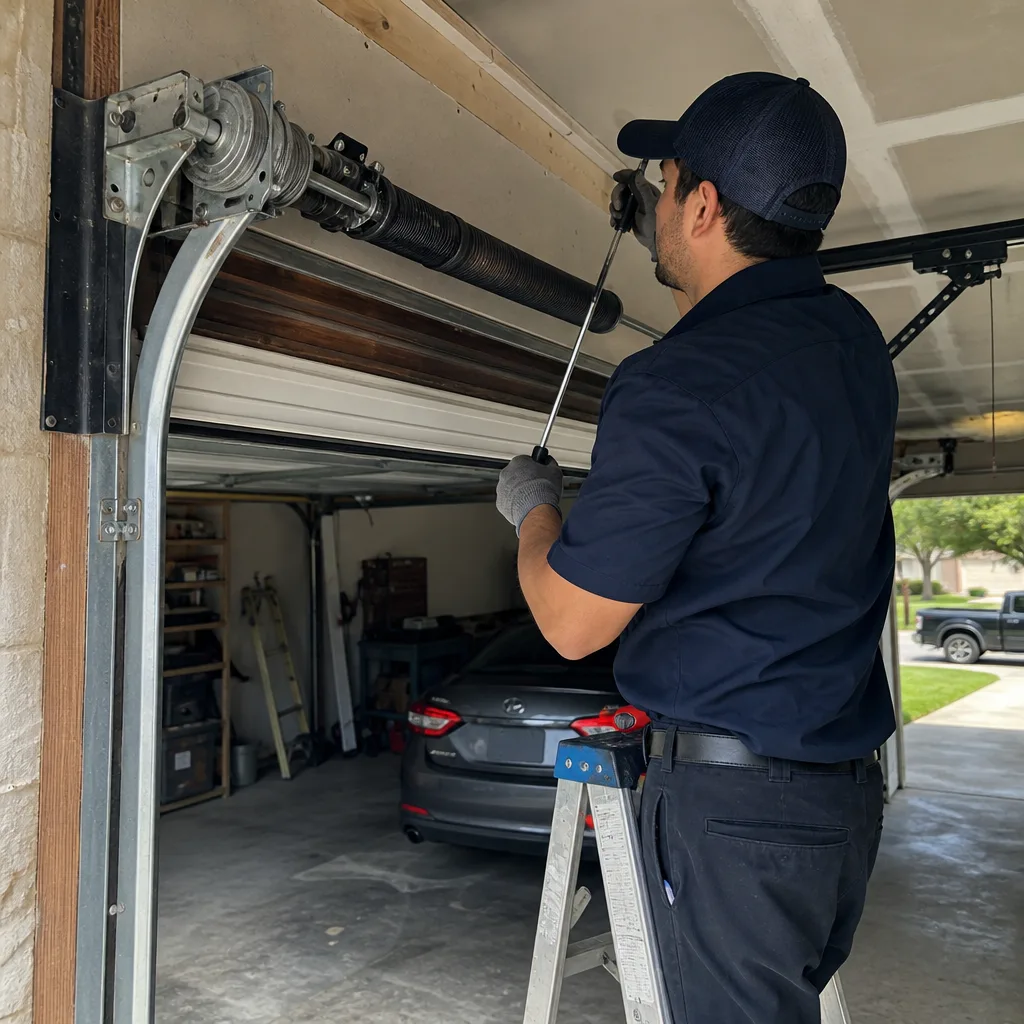
Cable replacement requires releasing the tension from the springs, and the spring tension is what lifts a 200-pound door. It’s genuine danger. You can inspect cables all day long. Replacing one is a job for someone who has done it hundreds of times and carries the parts on the truck. Not sure how to vet a technician? Read our How to Hire a Garage Door Contractor in Liberty: A Step-by-Step Guide. If you spot fraying on a cable, stop using the door regularly and make the call.
The Overnight Door Test After a Big Storm
Liberty gets wind. A big storm can shift a garage door just enough that it works fine for a week and then fails catastrophically when you’re late for work. The overnight door test is the simplest way we know to catch storm damage before it becomes a repair bill.
Here’s how it works:
- The evening after a big storm, close the garage door. Note whether it closes evenly and seats fully against the ground on both sides.
- In the morning, check the door before you open it. Has it shifted overnight? Is it still sitting squarely in the opening, with even gaps on both sides? A door that moved overnight has a balance or track issue that the storm either caused or exposed.
- Open the door first thing and watch the bottom corners. If one corner lags the other, or if the door hesitates at any point, the storm may have bent a track or knocked a roller out of alignment. That’s a small fix today and a big fix by Friday.
- Close the door again and check for daylight. With the door closed, stand inside the garage. Do you see daylight around the edges? A small uniform gap is normal. A wide gap on one side means the door or frame shifted in the wind.
- Run the door through a full open-close cycle twice. The first cycle shows you the immediate state. The second shows you what settled after the first cycle. If it gets worse on the second pass, something is actively working loose.
We recommend running this test after any storm with gusts over 40 miles per hour, and always after any named storm that passes through Liberty County. The beauty of it is that it requires no tools and no special knowledge. You’ll know by feel whether the door is right.
Seasonal Tune-Up Guide: Month by Month
Here is the full Liberty maintenance calendar. Do these tasks in these months and your door will handle everything the weather throws at it.
April: Pre-Wet-Season Lubrication
Before the humidity locks in, lubricate every moving metal part. That means all rollers, both hinges on each panel, both springs (a light coat on the spring coils), and the opener chain if you have a chain drive like many of the garage doors we service in Liberty. Inspect the weather seal at the bottom and replace it if it’s showing cracks. Clean the tracks with a dry cloth. This sets your door up for the long humid stretch.
May through August: Monthly Walkaround Only
The hot and wet months are not the time for heavy maintenance. It’s the time for observation. Run the five-point safety test monthly. Watch for rust starting on exposed metal. Listen for changes in the door’s sound. If the door starts locking up or moving roughly in the heat, the lubrication is wearing off or dust is accumulating. Quick monthly checks catch it.
September: Pre-Storm Inspection
As peak hurricane season approaches, inspect both cables for any fraying, check that the door is hanging square, and tighten any bolts that may have loosened over the summer. If you have a wooden door, check for swelling that could make the door bind in the frame. Run the five-point safety test. This is the time to catch a cable problem before a storm turns it into an emergency.
October: Post-Storm Lube and Tune
After the driest part of fall and the peak of hurricane season, lubricate again. The summer lube is gone. Run the overnight door test after any significant wind event. If the door has shifted at all, address it now before the cold arrives. This is also the month we get the call about the seized spring mentioned at the top of this page. Don’t skip October.
November: Pre-Cold-Snap Balance Check
Before the first cold front of January catches Liberty off guard, do a full balance check. Disconnect the opener using the emergency release cord and operate the door by hand. It should lift easily, hold at the halfway point, and close without resistance. If it’s heavy to lift or won’t stay open, the springs have lost tension and the cold weather will make it worse. Metal contracts in the cold, and a door that’s already out of balance will bind.
December through February: Cold Weather Habits
In the cold months, run the door at least once a day even if you don’t park in the garage. A door that sits unmoved in cold weather gets stiff. The springs work best when they work regularly. Keep the tracks clean. If the door is slow to respond, that’s your first sign that maintenance was missed somewhere upstream.
March: Pre-Spring Inspection
Before the cycle starts again, give the whole system a thorough look. Check all rollers for wear (worn rollers have flat spots or wobble when the door runs), inspect the springs for gaps in the coils, and run the five-point safety test one more time. If you’ve followed the calendar, this is a light month.
Common Mistakes to Avoid
- Using WD-40 on the rollers, hinges, or springs. WD-40 is a solvent. It strips lubricant and attracts caliche dust, leaving you with a door that’s drier and dirtier than before. Use silicone spray instead.
- Lubricating the track. The track needs to be clean, not slick. Grease or spray on the track surface turns Liberty dust into abrasive paste and wears out rollers prematurely.
- Only doing maintenance when something breaks. By the time you hear a grinding noise or feel a door go heavy, the wear has already happened. The whole point of a calendar is staying ahead of the failure, not reacting to it.
- Testing the auto-reverse with a foot or a hand. If the door doesn’t reverse, that’s a 200-pound door coming down on a body part. Use a 2×4. It’s the test the opener manufacturers specify for a reason.
- Ignoring a slow door. A door that opens or closes slower than it used to is a door that’s fighting something: a failing spring, a binding track, or an opener that’s wearing out. The opener is the symptom, not the cause. If the opener is straining, the problem is almost never the opener.
- Attempting spring or cable work without proper training. The spring stores enough energy to lift a 200-pound door. Releasing that energy incorrectly is dangerous. This is not a weekend project. Leave tension work to someone who does it every day.
When to Call a Professional
Some maintenance tasks are genuinely DIY. Lubricating hinges, cleaning the photo eyes, running the safety tests, and inspecting cables are all within a homeowner’s reach. Other situations need a trained hand. Call a professional if you see any fraying on a cable, if the springs have visible gaps or rust, if the door jumps its track, if the opener starts grinding or making new sounds, or if the five-point safety test fails on any point. Our Garage Door Repair services cover everything from cable replacement to full system overhauls. A garage door is 200 pounds riding on two springs. Respect it. Door work involving spring tension or cable drums is dangerous, and the cost of a professional visit is a fraction of the cost of a broken door or a broken hand.
Otto’s Garage Door offers free estimates in Liberty. Call (346) 496-4718 and Otto will answer, quote the job on that call, and hold the number when he gets there.
Frequently Asked Questions
Twice a year minimum: once in April before the wet season, and once in October after the driest part of fall. If you live on a caliche road or gravel drive, lubricate every three to four months. Use a silicone spray on rollers, hinges, and springs. Never use WD-40, which attracts dust and strips lubricant. Call (346) 496-4718 for a free estimate on a full tune-up.
A professional garage door tune-up in Liberty typically runs between $80 and $150, depending on the condition of the door and the number of parts that need adjustment or replacement. Weather seal replacement, roller replacement, and spring adjustments are billed separately if needed. Otto’s Garage Door quotes the full price before any work starts and holds that number at the door. Call (346) 496-4718 for an exact quote.
Yes. The five-point safety reversal test takes 90 seconds and requires no tools. Lay a 2×4 flat under the door, close it, and confirm the door reverses. Wave your hand in front of each photo eye separately. Pull the emergency release cord while the door is closing. Clean the photo eye lenses and check the indicator lights. If any test fails, call a professional.
Standard torsion springs are rated for 10,000 cycles, which translates to roughly 7 to 10 years for most Liberty homeowners who open the door twice a day. Humidity and caliche dust can shorten that lifespan if the springs aren’t lubricated. If you don’t know when your springs were last replaced, have them inspected during your next tune-up. Otto counts spring cycles the way you count tire miles and will tell you what’s left on yours.
Yes. A properly maintained door that is balanced, lubricated, and square in its tracks is far less likely to blow off its track or jam during high winds. The overnight door test after a big storm catches alignment problems before they become repairs. Maintenance doesn’t prevent storm damage entirely, but it dramatically reduces the chance that a 60-mile-per-hour gust turns a small issue into a full door failure.
Spring failure from neglect is the number one problem we see across Liberty. The spring quietly loses tension over years, and one morning the door won’t lift. The most frustrating part is that most spring failures give warning signs: a door that’s heavy to lift by hand, a door that drifts down when left halfway, or a visible gap in the spring coils. Catching those signs early is why the maintenance calendar works. Call (346) 496-4718 for a free spring inspection.
The Bottom Line
Garage door maintenance in Liberty is not about doing more work. It’s about doing the right work in the right month. Lubricate before the wet season. Test safety systems monthly. Inspect the cables after every storm. Run the overnight door test after high winds. Use silicone spray, not WD-40. Catch the small problems early and the big problems never happen. If you’d rather have Otto handle it, we’ve been doing this in Liberty since 2004, and a live person answers the phone 24/7. For those who want to keep learning, we publish more guides & resources on our blog. Call (346) 496-4718 for a free estimate. The name on the van is the name on the invoice and the name on the license. Otto is a palindrome: reads the same from either end, same as the door.
Looking for more on garage doors in Liberty? Read our guides on Otto’s Garage Door home, Garage Door Repair in Liberty, and Garage Door Installation in Liberty.
Written by Otto Reinhardt, Owner at Otto’s Garage Door, serving Liberty since 2004.